Call spread strategies allow traders to refine their risk exposure, reduce costs, and control potential profits and losses when trading options. Instead of simply buying a call outright, a spread involves simultaneously buying and selling options with different terms on the same underlying security. By using spreads, traders can reduce the cost of entry, hedge directional risks, and even profit from time decay or volatility changes.
Types of Call Spreads
1. Vertical Spread
A vertical spread involves calls with the same expiration date but different strike prices. It is commonly used to limit risk while maintaining directional exposure.
- Bull Call Spread: Buy a lower strike call and sell a higher strike call. Used when moderately bullish.
- Bear Call Spread: Sell a lower strike call and buy a higher strike call. Used when moderately bearish.
2. Horizontal Spread (Calendar Spread)
A horizontal spread, also known as a calendar spread, involves calls with the same strike price but different expiration dates. This strategy exploits differences in time decay (theta) between short-term and long-term options.
3. Diagonal Spread
A diagonal spread is a combination of both vertical and horizontal spreads—options have different strike prices and different expiration dates. It allows traders to capitalize on both time decay and price movement simultaneously.
Credit vs. Debit Spreads
- Credit Spread: The spread results in a cash inflow, meaning the premium received from selling the option is higher than the premium paid for buying the option. These are often used in income-generating strategies.
- Debit Spread: The spread results in a cash outflow, meaning the trader pays more for the purchased option than they receive from the sold option. These are used when a trader wants to limit risk while maintaining upside potential.
Example:
Stock XYZ is trading at $42.
- Buy one XYZ 40 call
- Sell two XYZ 45 calls
Since the premium collected from selling two 45 calls offsets the cost of buying the 40 call, the strategy is established at little or no net cost. This structure is similar to a ratio spread, where more contracts are sold than purchased, increasing risk if the stock rises sharply.
Calendar Spread: Trading Time Decay
A calendar spread involves selling a near-term option and buying a more distant option with the same strike price.
Why Use a Calendar Spread?
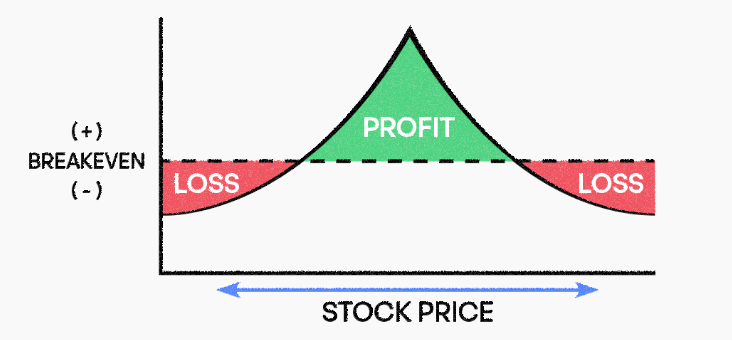
Time decay (theta) erodes the value of short-term options faster than long-term options. A trader profits when the near-term option loses value at a faster rate than the longer-term option.
Key Considerations:
- Anti-Volatility Strategy: A standard calendar spread benefits when the stock price remains stable. If the stock moves too much, both options gain intrinsic value, reducing the spread’s profitability.
- Bullish Calendar Spread: The goal is for the near-term short call to expire worthless, allowing the trader to keep the premium and hold the longer-dated call for additional upside. This is often structured with out-of-the-money (OTM) calls.
- Most Common Setup: Sell the nearest-term call and buy an intermediate-term call.
Butterfly Spread
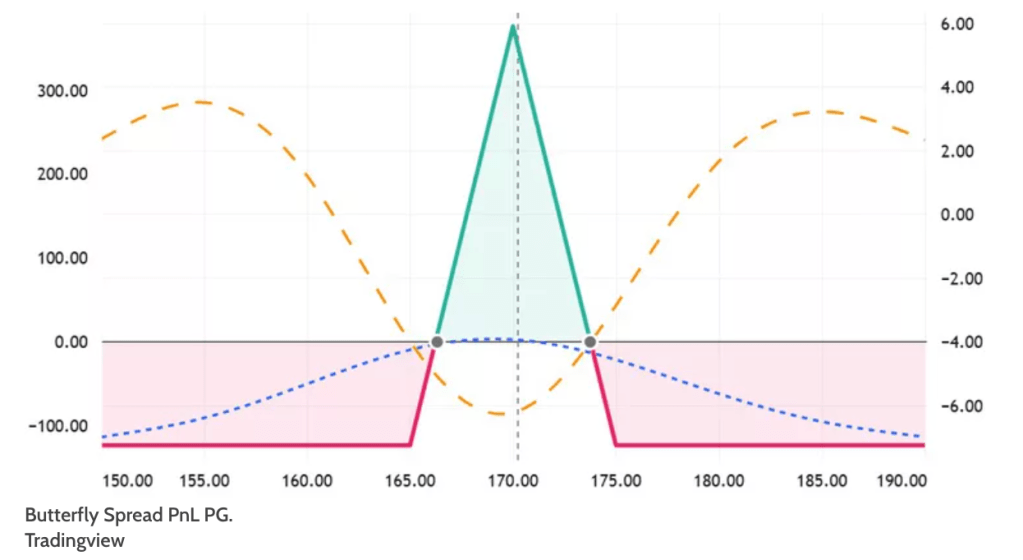
A butterfly spread is a neutral strategy combining a bull call spread and a bear call spread. It is ideal for traders who expect minimal stock movement.
Structure of a Butterfly Spread:
A trader simultaneously:
- Buys one lower strike call (bullish)
- Sells two middle strike calls (to reduce cost)
- Buys one higher strike call (bearish)
This results in a limited risk, limited reward strategy where maximum profit occurs if the stock is at the strike price of the written calls at expiration.
Example:
Stock is trading at $60, and a trader executes the following butterfly spread:
- Buy one July 50 call for $12
- Sell two July 60 calls for $6 each
- Buy one July 70 call for $3
Profit Calculation at Expiration (Stock at $60):
- The two short July 60 calls expire worthless → $1200 gain
- The July 70 call expires worthless → $300 loss
- The July 50 call is worth $10 (intrinsic value), bought for $12, so a $200 loss
Total Profit=1200−300−200=$700\text{Total Profit} = 1200 – 300 – 200 = \mathbf{\$700}Total Profit=1200−300−200=$700
Why Use a Butterfly Spread?
- Low Risk, Low Cost: Butterfly spreads are cost-efficient because the premium received from the middle strike calls offsets much of the cost of the outer strike calls.
- Ideal for Sideways Markets: This strategy is most effective when the stock does not move much before expiration.
- Defined Risk and Reward: Unlike naked options, butterfly spreads have a predefined maximum profit and loss.
Final Thoughts
Call spread strategies provide traders with structured risk and return profiles while leveraging options for directional or volatility-based trading. The choice of strategy depends on:
- Expected stock movement (bullish, bearish, or neutral)
- Time horizon (short-term vs. long-term)
- Volatility expectations (high vs. low)
By carefully selecting the right type of spread, traders can enhance profits, manage risks, and optimize their use of capital.
 Practical finance
Leave a comment