I always thought stock screening was more of an art than a science. Everyone has a different opinion on how to pick the best stocks. Here I am going to show you one manual way I screen stocks. The exact methodology is not that important as much as the tools you can use and knowing what to look for. For those who are not comfortable with writing code this is a great resource. I will illustratively demonstrate step by step one of the strategies I use to pick stocks-.
Keep reading.
I use this tool called https://www.tradingview.com/screener/. I havent used the paid version yet so I dont have an idea of what extra features the paid version contains but the free version has been pretty useful to me.
STEP 1: APPLY THE FILTERS
I usually have a few filters I use as well as few sectors I like to concentrate on at each time. Since Im a huge fan of value investing I tend to shy away from volatile sectors like tech/biotech and finance.
Click on Filters on the top right and select the filters – Here is what my page looks like
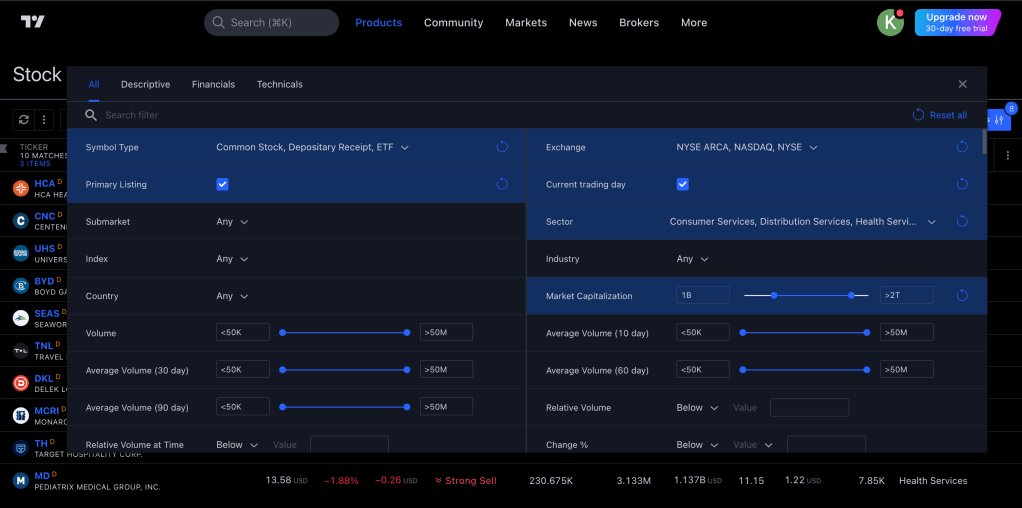
the filters I chose were
- Sector: Consumer services, Distribution services, Health services
- P/E (Price/Earnings trailing 12 mo) < 15
- Market Cap: >1B
- RSI (Relative Strength index) < 50
I usually tweak the filters until I get about 10-15 stocks to analyze. This makes it easier to drill down on them without being overwhelmed with too few or too many stocks. But if you have the time, no one is stopping you from creating a larger pool.
STEP 2: DEEP DIVE
After applying the filters this is what my page looks like. There are about 18 stocks.

ok now time to deep dive. One of the reasons I like trading view so much is the number of indicators it has. Click on the three dotted icon on the top right to get the full list of indicators.
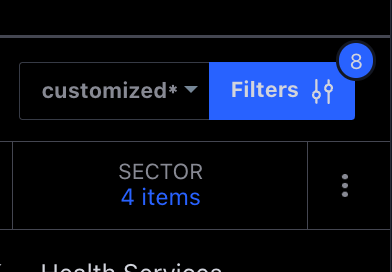
Here are the indictors I selected –
- 52 week high
- 52 week low
- price
- EPS
- Debt/Equity ratio
- Enterprise value/EBITDA
- Free cash flow
- Momentum
- Price/book
- Price/Earnings ratio
- Price/Free cash flow
- Price/Revenue
- Quick ratio
- Return on Equity
- YTD performance
For a definition of what these indicators mean, I would refer you to my earlier post on basic fundamental indicators.
I would generally look at all these values to indicate what the good stocks are. Everyone has a different prioritization but for me personally, following Warren Buffet’s footsteps I prioritize cash flow growth as well as price/free cash flow.
Now that you have picked a few stocks lets go to the next step –
STEP 3 VALIDATION
Since you will be putting your own money on the line, its good to validate the stock(s) you have chosen. Why do I do this? To make sure I have done my due diligence. For eg you pick a company with very low P/E which can either indicate it is undervalued or its a failing company and investors have jumped ship. You dont want to invest in a company thats on a downward spiral.
There are many ways to run validation. The more you invest time in this the more confident you are of your pick. But for full time working professionals like me, we dont have the luxury to run deep analysis on a company’s financials (maybe I will make a post on how to automate this).
What I do is go to Yahoo finance page for the stock I picked. For example I picked CNC (Centene corporation).
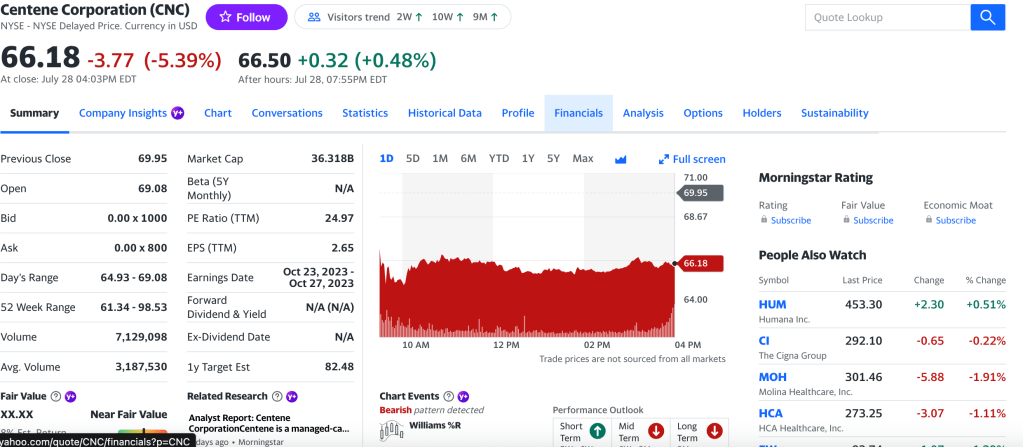
I would like to skim through the analysts opinions (in the analysis tab). Its good to also read a little bit about the company and what it does (hey your money is at stake).
Here are the things I like to look at –

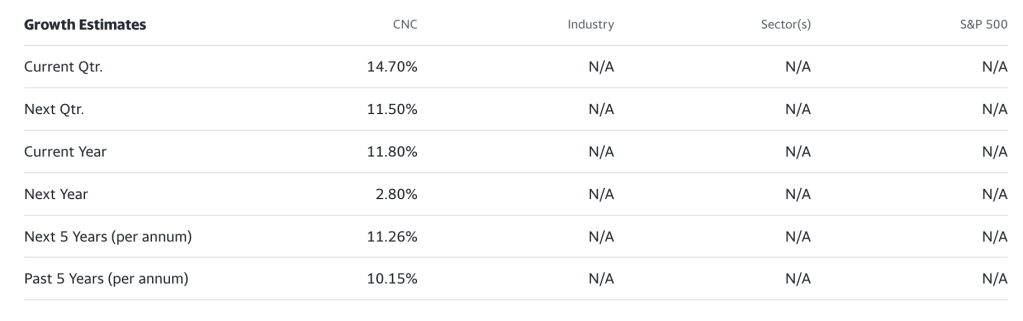

There you have it.
Of course there is no right and wrong strategy to do this. There have been books written on various strategies to pick stocks. This post merely shows you some tools so that you can easily apply your favorite methods and starting out with stock picking.
Happy investing.
Disclaimer: The information provided here is for general informational purposes only and should not be considered as professional financial or investment advice. Before making any financial decisions, including investments, it is essential to seek advice from a qualified financial advisor or professional.
 Practical finance
Leave a comment